September 21, 2026
How Ollim reads your week before setting the next target
One workout feels unusually easy, and the temptation is to add weight everywhere. Another feels heavy, and the temptation is to replace the whole program.
Both reactions make sense in the moment. Neither gives the next target much context.
A useful adjustment begins somewhere quieter: with a record of what you were asked to do, what you actually completed, and whether the two are comparable. The week matters because it gives a single session neighbors. It does not turn every session into one final score.
TL;DR
Preserve the completed work, compare it with the target that was given, and change only what the record supports. One strong or difficult set can be useful evidence without becoming the story of the entire week.
A week is context, not a score
It is easy to label a week good or bad. You completed every planned session, or you missed two. A familiar weight moved smoothly, or one exercise fell short.
Those summaries can be useful, but they flatten the details that make a next decision possible. A missed session says something different from completed sets that stopped below the repetition range. A load held for the planned repetitions says something different from a heavier load you chose on the day. A difficult final set does not erase the work before it.
The goal is not to reward a good week or punish a difficult one. It is to preserve enough context that the next target responds to the work instead of to the mood surrounding it.
Start with what actually happened
The most useful record is concrete. Which exercise did you perform? How many working sets did you complete? What load and repetitions did you record? If you chose to log effort, how difficult did those sets feel?
That last detail is optional in Ollim. When effort is available, it adds another way to understand the set. When it is not, the completed repetitions and load still matter. Missing one kind of input should not turn the rest of the record into a guess.
This is also why completion matters. A planned session is an intention. A completed session is evidence. The next target should know the difference.
Compare the record with the prescription
Numbers only become useful when they have a reference. Six repetitions can be on target in a range of six to eight and short in a range of eight to ten. The same load can represent a successful repeat, an intentional increase, or a step below the prescribed working weight.
Ollim keeps that reference with the session: target sets, a repetition range, an effort target, and where available a working weight. The completed record can then be read against the target that existed at the time. It is not judged against a target rewritten after the workout.
That distinction keeps an adjustment honest. More is not automatically better, and less does not automatically mean failure. The question is whether the comparable work met, exceeded, or fell short of the job it was given.
The program decides the clock
Not every useful adjustment waits for the same moment. A beginner linear-progression track can read the latest completed performances before the next session. A standard program can review the prior week when the next week begins. New programs and quiet weeks may not have enough to say yet.
This difference is deliberate. Cadence belongs to the program, not to a universal rule that every Sunday must produce a change. The record should be read at the point where that program can make a responsible next decision.
It also means Ollim does not need to invent activity to look attentive. Sometimes the right outcome is a new target. Sometimes it is another comparable attempt. The detailed choice between adding, holding, and stepping back deserves its own explanation; the important point here is that each choice begins with the same preserved evidence.
How Ollim carries the week forward
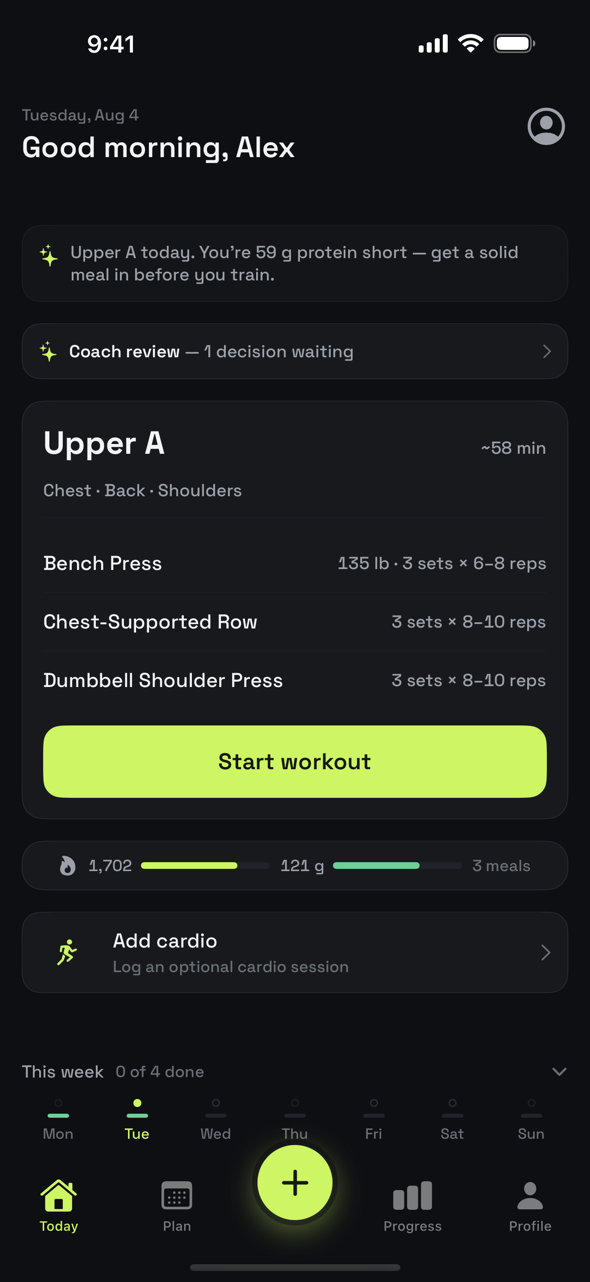
When you open the next workout, Ollim gives each exercise a concrete target rather than asking you to reconstruct the last session from memory. The target can include sets, a repetition range, effort, and a working weight. Your completed log becomes part of the input for what follows.
For eligible standard programs, Weekly Coach can also surface a recap and explain changes that were applied or decisions that need your input. Other tracks can progress on their own cadence without showing that same weekly sheet. The interface differs because the underlying program does.
You remain part of the loop. A target is a prepared starting point, not a command that makes the room, equipment, or how you feel disappear. You can adjust the set in front of you and leave a more accurate record for the next decision.
Try the same review yourself
Before changing next week's plan, choose one repeated exercise and ask three questions:
- What target did I start with?
- What did I actually complete?
- Do I have enough comparable attempts to change something, or do I need another observation?
This review takes less discipline than rebuilding a program and produces more useful information. It turns “that felt good” or “that went badly” into a specific next question.
Let the week inform the next target, not become a verdict on you.